
Photo Credit: Brandon Doheny / MBON
Sudden underwater darkness can dramatically alter coastal ecosystems. Sediment, algal blooms, and organic matter can block sunlight from reaching the seafloor, sometimes plunging habitats into near total darkness. To better understand these events, an international team of researchers has developed the first standardized framework for identifying and comparing what they call marine darkwaves.
Published in Communications Earth & Environment, the study defines a marine darkwave as a brief but intense period of light loss underwater, capable of disrupting ecosystems that rely on sunlight, including kelp forests, seagrass meadows, and coral communities.
“We have long known that light levels are critical for photosynthetic organisms — like algae, seagrasses and corals — and that factors that reduce light to the seafloor can impact them,” said co-author Bob Miller, a research biologist at UC Santa Barbara’s Marine Science Institute. “This study creates a framework for comparing such events, which we call darkwaves.”
Lead author François Thoral, a postdoctoral researcher at the University of Waikato and Earth Sciences New Zealand, explained that light is a fundamental driver of ocean productivity, but short-term darkening events have been largely overlooked. To address this, the team analyzed long-term data from multiple sources, including 16 years of seafloor light measurements from the Santa Barbara Coastal Long Term Ecological Research (LTER) program, 10 years of coastal data from New Zealand’s Hauraki Gulf/Tīkapa Moana and the Firth of Thames, and more than 20 years of satellite-based seafloor light estimates along New Zealand’s East Cape.
Their findings show that marine darkwaves can last from a few days to over two months, with some events nearly eliminating light at the seafloor. In New Zealand’s East Cape alone, researchers identified dozens of darkwaves since 2002, often linked to storms and major weather events, including Cyclone Gabrielle.
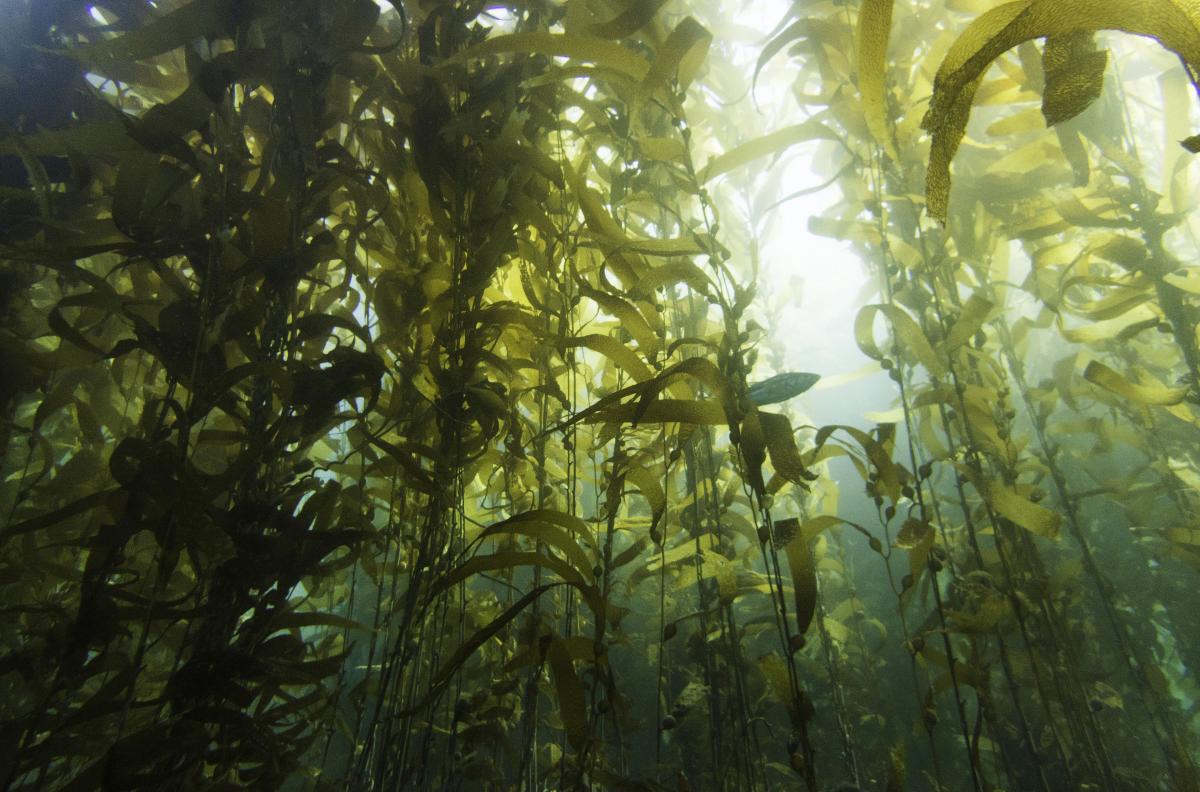
Photo Credit: Katie Davis Koehn
Historically, gradual declines in water clarity have been seen as the main threat to coastal ecosystems. This study highlights that even short-lived darkwaves can have serious consequences. Brief periods of reduced light can impede photosynthesis in kelp, seagrasses, and corals, while longer events can alter the behavior of fish, sharks, and marine mammals.
The marine darkwave framework complements existing tools for monitoring ocean stress, such as marine heatwaves, acidification, and oxygen depletion. By providing a standardized approach, it equips coastal managers, conservation groups, and researchers with a method to identify when ecosystems are under acute stress.
Because the Santa Barbara Coastal LTER is one of the few programs worldwide to collect long-term seafloor light data, Miller and his colleagues at UC Santa Barbara plan to expand research on how sedimentation and turbidity—often intensified by wildfires and landslides—affect California’s kelp forests.
Adapted from original reporting by Harrison Tasoff, “Scientists create a system for tracking underwater blackouts,” The Current, UC Santa Barbara, 2026.