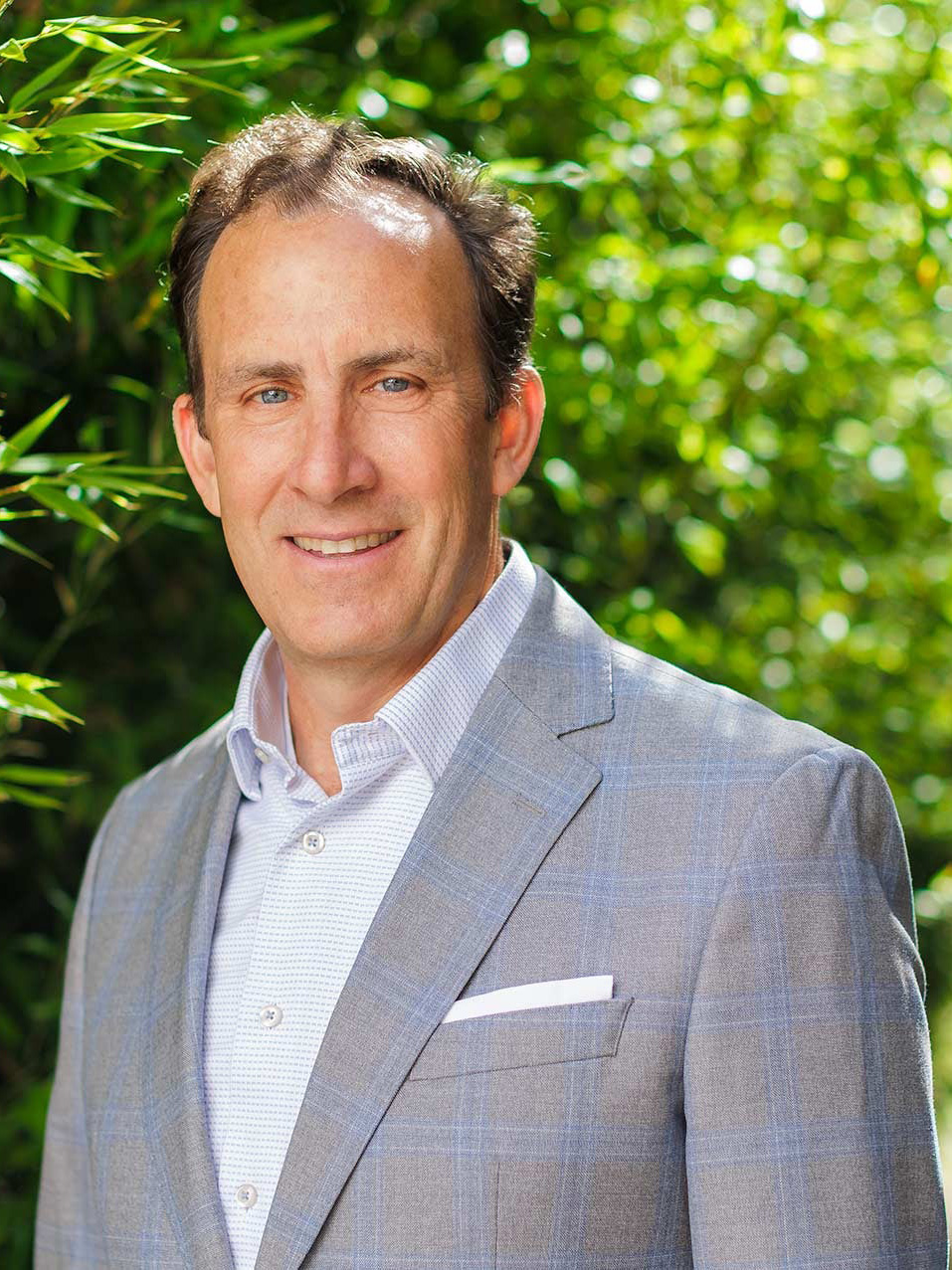
Creating lasting environmental solutions requires understanding how people make decisions. That principle has guided the career of Christopher Costello and continues to shape his work with students, colleagues, and collaborators around the world.
Costello has spent his career applying economics to environmental challenges ranging from sustainable fisheries and ocean governance to climate change and biodiversity conservation. As a Principal Investigator with UC Santa Barbara’s Marine Science Institute and a Distinguished Professor at the Bren School of Environmental Science & Management, he has helped advance interdisciplinary approaches to environmental problem-solving. His work also led to the creation of the Environmental Markets Lab (emLab), a collaboration between UC Santa Barbara’s Marine Science Institute, Department of Economics, and Bren School of Environmental Science and Management. Through emLab, interdisciplinary research is translated into practical market-based solutions that help address global environmental challenges.
Costello was recently named a Fellow of the Association of Environmental and Resource Economists (AERE), the organization’s highest honor. Fellows are recognized for sustained contributions through scholarship, leadership, mentoring, and service.
AERE recognized Costello’s influential research on fisheries policy, ocean governance, and environmental regulation, including his landmark 2008 Science paper on catch shares and fisheries collapse. The organization also highlighted his leadership as former chief economist at the Environmental Defense Fund, his involvement in the Latin American Fisheries Fellowship, and his mentorship of more than 30 Ph.D. students and postdoctoral scholars.
Costello said he was surprised by the recognition, noting that he had not known he had been nominated. UC Santa Barbara Chancellor Dennis Assanis praised Costello’s work, saying his research has helped create economic frameworks that encourage sustainable behavior and reflects the university’s interdisciplinary commitment to environmental solutions.
Costello’s research focuses on the relationship between economic incentives and environmental outcomes. Much of his work examines market failures, where the environmental costs of human activities are not reflected in economic decisions, and explores how better-designed incentives can encourage more sustainable choices. He has built a research program around incorporating these external costs into decision-making, an idea that first captured his interest while studying political economy as an undergraduate.
That perspective has shaped his approach throughout his career. Rather than relying only on regulation, Costello believes environmental markets can align economic interests with conservation goals. This philosophy inspired the creation of the Sustainable Fisheries Group in 2006 with former Bren School Dean Steve Gaines, an initiative that later became part of emLab.
Fisheries provide one of the clearest examples of this approach. While scientists can establish sustainable catch limits, Costello argues that conservation succeeds when people have incentives to protect the resources they depend on. Allocating transferable fishing rights gives fishermen a direct stake in the long-term health of fish populations while allowing flexibility within the industry.
Today, emLab continues its leadership in sustainable fisheries while expanding its work on carbon markets and climate solutions. Costello is especially interested in developing nature-based compliance markets that could recognize the role of forests and other ecosystems in removing and storing carbon while complementing existing emissions reduction efforts.
Despite his optimism about environmental progress, Costello believes effective solutions must begin with a realistic understanding of human behavior.
“Wishing that people behaved differently than they do isn't a solution,” he said. “A solution is an intervention that changes people's behavior to solve a problem.” Once we recognize this, then we have to start examining the incentives behind all the behaviors involved in an issue, he said, as well as any possible solutions we might devise.
Costello said lasting environmental progress depends on designing policies that recognize how people respond to incentives and channel those behaviors toward outcomes that benefit both society and the planet.
Adapted from original reporting by Harrison Tasoff, “Christopher Costello recognized for his pioneering work in environmental markets,” The Current, UC Santa Barbara, 2026.
