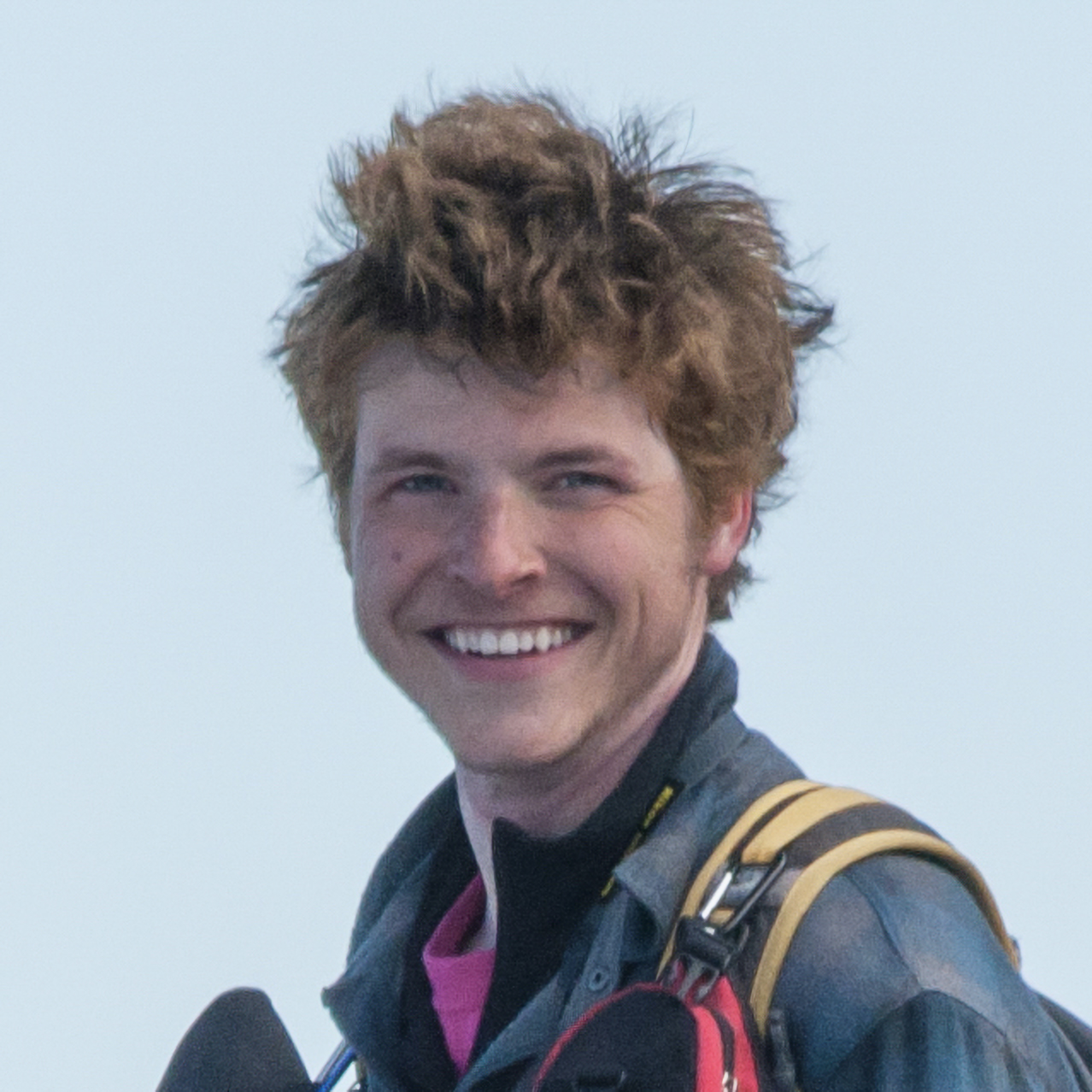
A Career Shaped by Curiosity and Coincidence
Sometimes, scientific careers are shaped as much by curiosity and chance as by careful planning. For MSI postdoctoral researcher Dr. Christian John, one such moment came through a strange yet wonderful coincidence.
While completing his PhD at UC Davis, Dr. John was writing a major review in his field when he came across a study that drew a striking comparison: wildebeest roaming the African savannah can play a similar ecological role to parrotfish grazing on coral reefs. Intrigued by the idea and impressed by the work, he emailed the author to compliment the writing—assuming at the time that the paper had been written by a fellow graduate student. Instead, he received a same-day response from a professor. That professor was Marine Science Institute researcher Dr. Deron Burkepile.
A year later, in 2022, as Dr. John began searching for postdoctoral opportunities, an advertisement for an early-career scientist position caught his eye—and it was posted by the very same researcher he had reached out to the year before. In 2023, that coincidence became a collaboration when Dr. John joined MSI as a postdoctoral researcher.
Seeing Connections Across Land and Sea
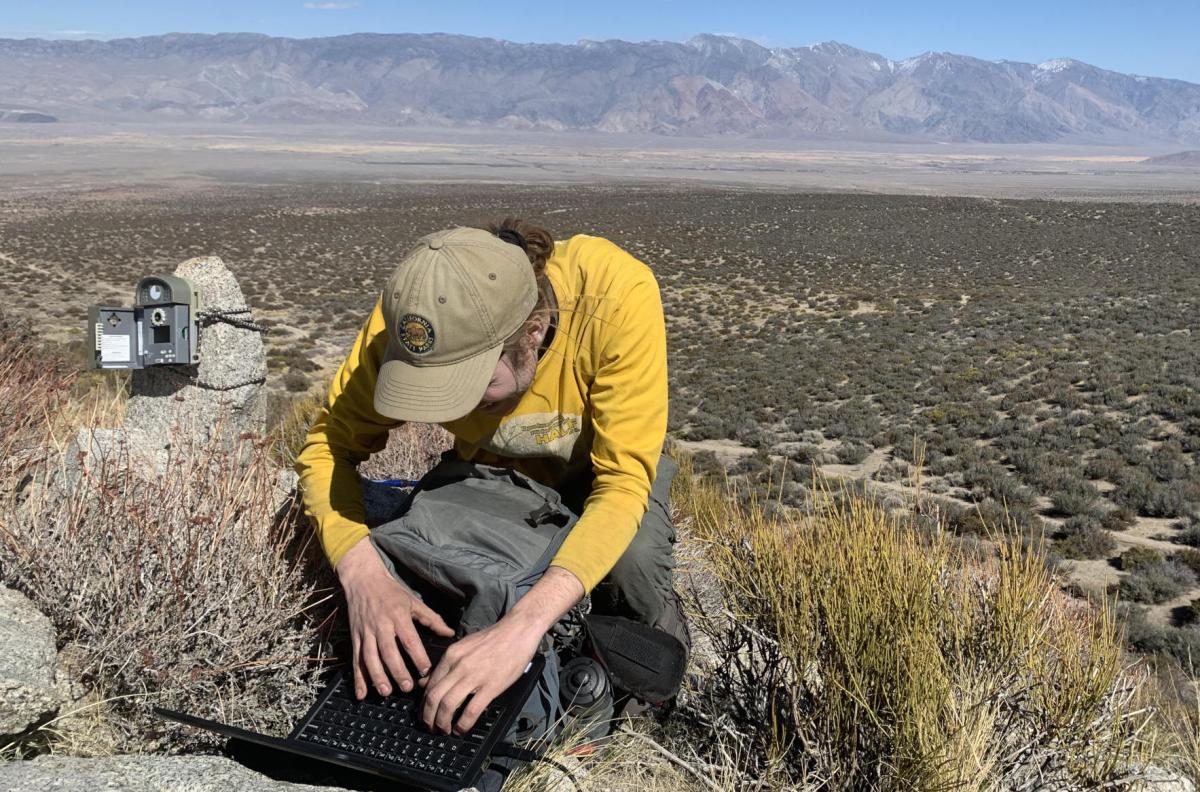
At MSI, Dr. John is a landscape ecologist investigating how global change affects seasonal ecological processes. His research explores how climate, land use, and ecological communities interact across space and time—and how human activities reshape those connections. By combining detailed field observations with high-resolution satellite imagery, drone data, and time-lapse cameras, he studies long-term ecological processes at what he describes as “hyper-speed.”
Currently, Dr. John’s work focuses on land–sea connections in tropical coral reef ecosystems. By pairing land-use maps with weather data and in situ water sampling, he investigates how deforestation and development upstream influence the flow of sediments and nutrients into coral reef lagoons. His research has shown that rivers draining deforested watersheds carry higher nutrient and sediment loads, and that reef habitats closer to shore often exhibit altered microbial communities—findings that are critical for informing coral reef conservation strategies.
From Remote Fieldwork to a Broader Perspective
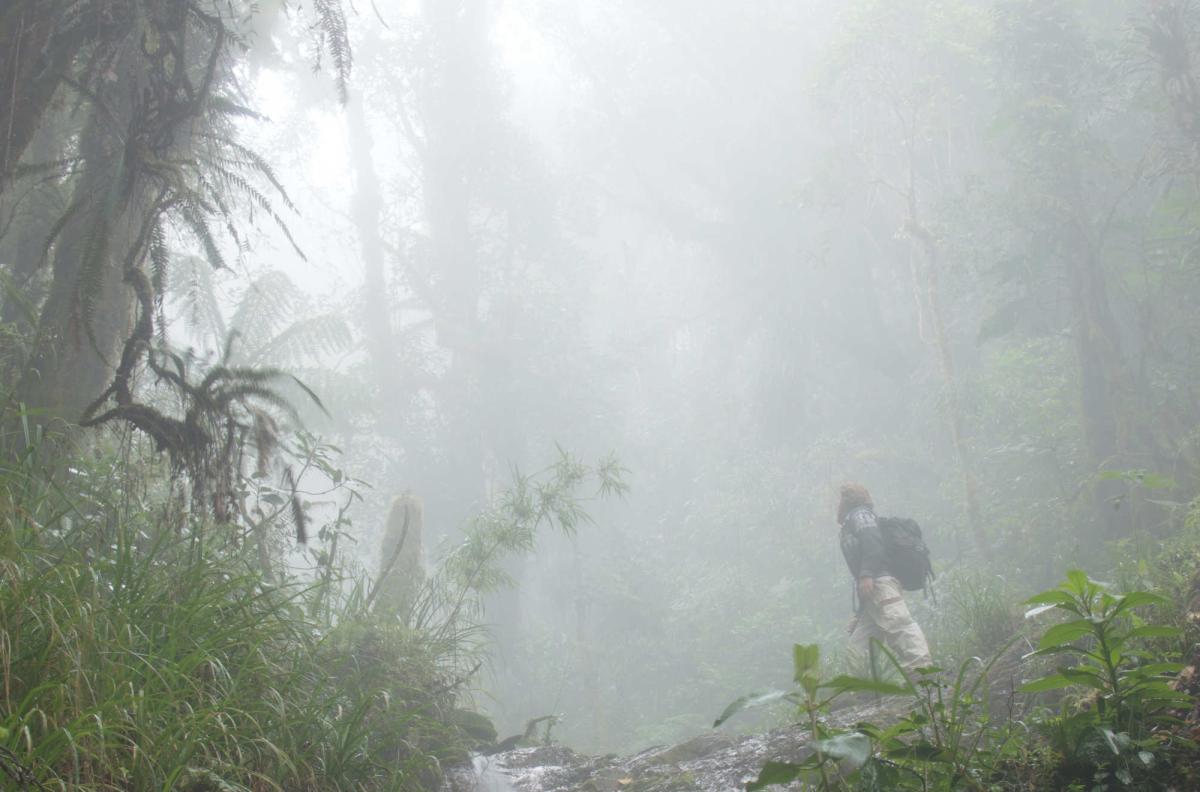
Although his research now centers on coral reefs, Dr. John’s scientific path began on land. As an undergraduate and graduate student, he spent hundreds of days in the field studying caribou in Greenland and Sierra Nevada bighorn sheep in California’s High Sierra—often working alone in remote, rugged landscapes. Those experiences shaped his understanding of how animal movement, seasonal change, and ecosystem dynamics are deeply intertwined.
From early experiences catching salamanders in a high school biology lab to dabbling in molecular biology, hummingbirds, and archaeology, Dr. John’s career has been defined by exploration. Outside of research, he can often be found hiking, taking photographs, running, making coffee, or thinking about sailing.
That expansive view of ecology—and of time itself—is reflected in a favorite quote by Kurt Vonnegut that resonates with his work:
“All time is all time… Take it moment by moment, and you will find that we are all… bugs in amber.”
Much like the landscapes and seascapes he studies, Dr. John’s research highlights the importance of looking across scales—connecting moments, seasons, land, and sea to better understand a changing world.

If you are interested in helping fund the work of MSI researchers like Dr. Christian John, please click on the Give button, or use the QR code on the left.